


Pollença is one of the most rewarding towns in northern Mallorca and one of the most underrated food destinations on the island. Here’s how to make the most of it.
Most visitors to Mallorca gravitate towards the south, the capital, the beaches, the well-worn tourist trail. But the north of the island operates at a different pace, and nowhere captures that better than Pollença. This is a town that has stayed genuinely itself: honey-stoned streets, a thriving weekly market, traditional Mallorcan cooking, and a café culture that locals have been part of for generations.
For food travellers in particular, Pollença rewards exploration. The food scene here isn’t built around trends or tourist menus; it’s rooted in local ingredients, traditional recipes, and restaurants that have earned their reputation through consistency rather than Instagram. If you’re planning a food-focused trip to Mallorca, this is a town that belongs on your itinerary.
Getting to Pollença
Pollença sits in the north of Mallorca, roughly 55 kilometres from Palma. The drive along the Ma-13 takes around 45 minutes in low season and closer to an hour in summer. There is a bus service from Palma, but a car gives you the most flexibility, particularly if you want to explore the surrounding area including Port de Pollença and Cap de Formentor.
The town works well as a day trip from Palma or as a base for a few nights if you want to spend more time in the north. Either way, arriving with enough time to do it properly Pollença is not a town that rewards rushing.
Plaça Major and the Sunday market
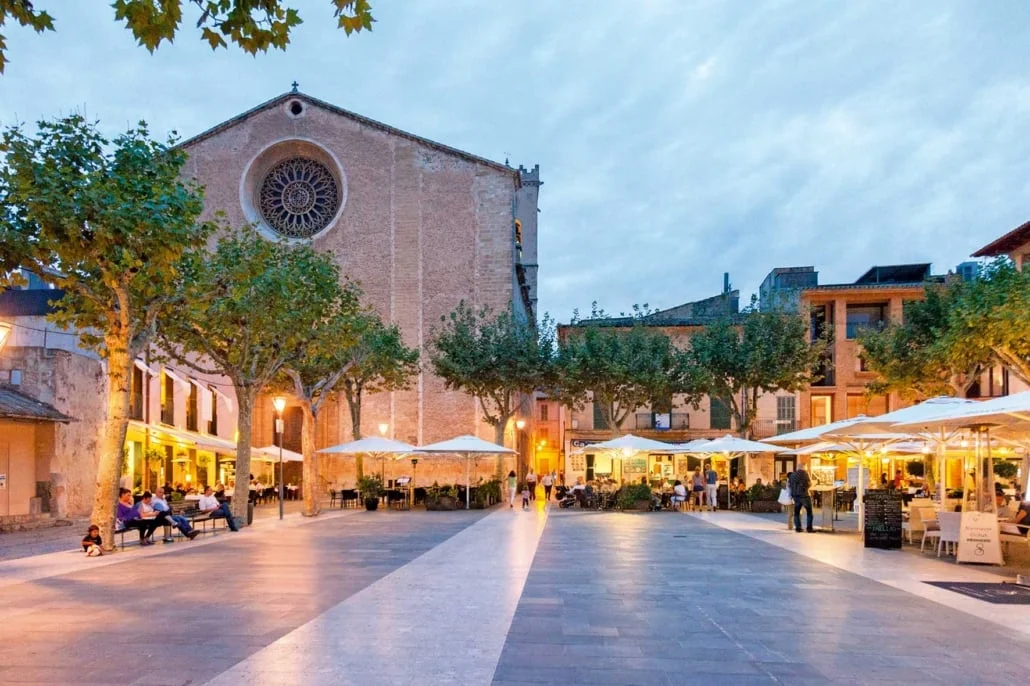
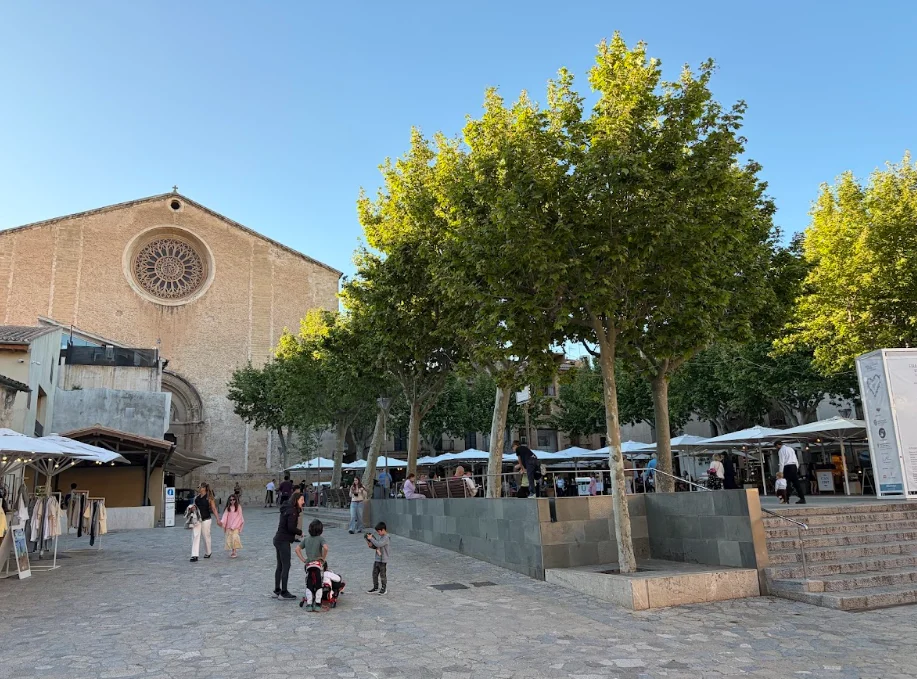
The main square Plaça Major is the natural starting point for any visit. It’s surrounded by traditional cafes, shaded by old plane trees, and busy throughout the day with a mix of locals and visitors. Come for a coffee in the morning and stay for the people-watching. The square has a rhythm to it that takes a while to appreciate, and it’s worth giving it time.
The best day to visit Pollença is Sunday, when Plaça Major fills with one of the most authentic weekly markets in Mallorca. Stalls sell fresh produce, local cheeses, preserves, caramelised almonds, handmade crafts, and seasonal ingredients from the surrounding area. It’s a practical market used by locals as much as visitors, which is part of what makes it worth going to. Arrive before 10am to see it at its best.
The 365 Calvari Steps
The Escala del Calvari is Pollença’s most iconic landmark, a cypress-lined staircase of 365 steps climbing from the edge of the old town up to a small hilltop chapel. The views from the top stretch across the terracotta rooftops, the surrounding valley, and the Tramuntana mountains beyond. It’s an easy 10 to 15 minute climb at a relaxed pace and completely free.
Go early in the morning or late in the afternoon to avoid the heat and the peak visitor hours. Either end of the day offers better light and a quieter experience at the top. It’s one of those things that sounds like a tourist activity but genuinely rewards the effort.
What to eat in Pollença
Pollença’s food scene is traditional, ingredient-driven, and honest. The restaurants here don’t chase trends; they focus on classic Mallorcan and Spanish dishes made well, often using produce from the surrounding area and seafood from the nearby port.
Essential dishes to try
Start with pa amb oli, the foundational Mallorcan dish of thick bread rubbed with fresh tomato and drizzled with local olive oil. From there, look for tumbet (a slow-cooked layered dish of local vegetables), fresh grilled fish, and rice dishes built around the day’s catch. For breakfast, the ensaïmada is essentially Mallorca’s soft, spiral pastry that you’ll find in every bakery on the island.
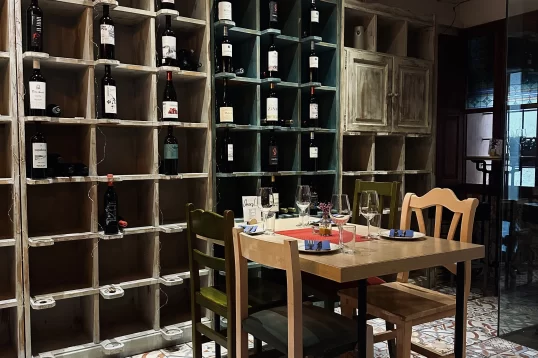
Pair everything with local wine. The vineyards around the Tramuntana and central Mallorca produce wines that are increasingly well-regarded, and most restaurants in Pollença will have a good local selection. Ask the staff for a recommendation; they usually know the list well.
For something more casual, the cafes and restaurants around Plaça Major offer reliable versions of the classics at reasonable prices, and the setting especially in the evening makes up for any lack of ambition in the kitchen.
Food tours in Pollença
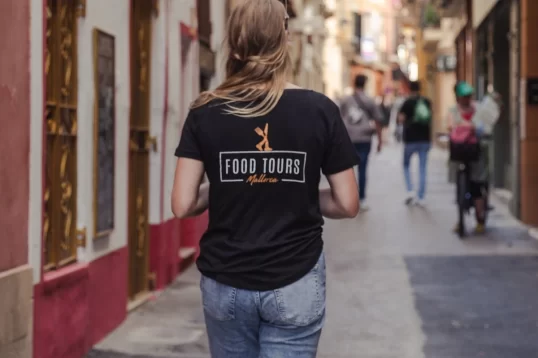
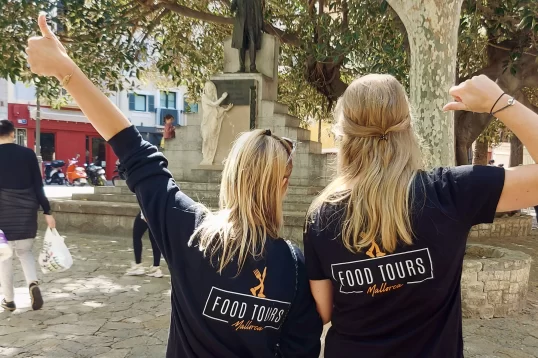
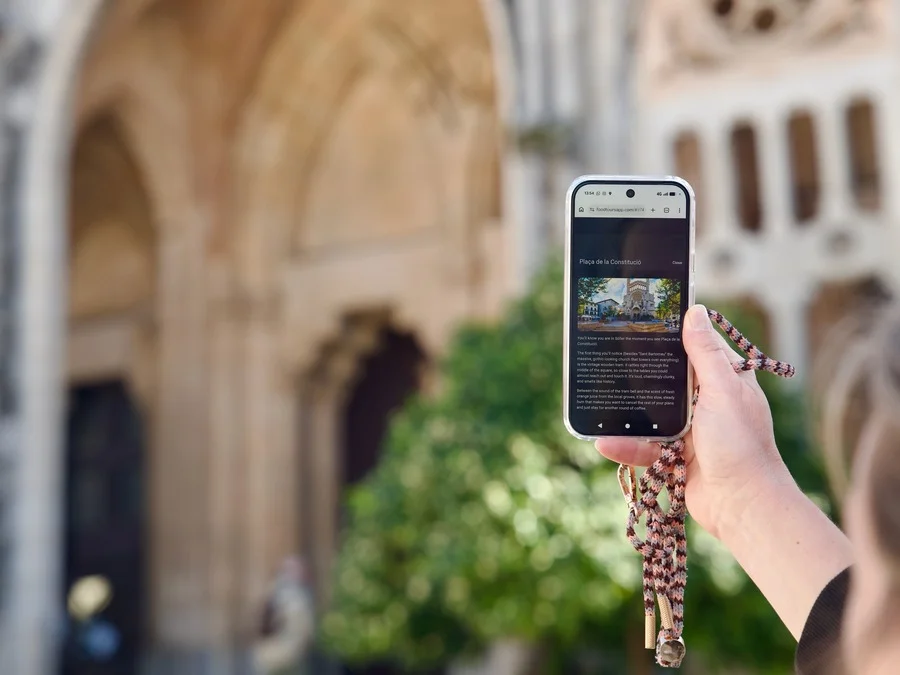
One of the most effective ways to eat well in a new town is to follow someone who already knows it. There are self-guided food tours in Pollença that take you through a curated set of local restaurants and bars, combining traditional dishes with context about the town’s food culture. It removes the guesswork and tends to surface places that don’t show up on the usual review sites. Worth considering if you’re only here for a day and want to make the most of it.
Exploring the old town
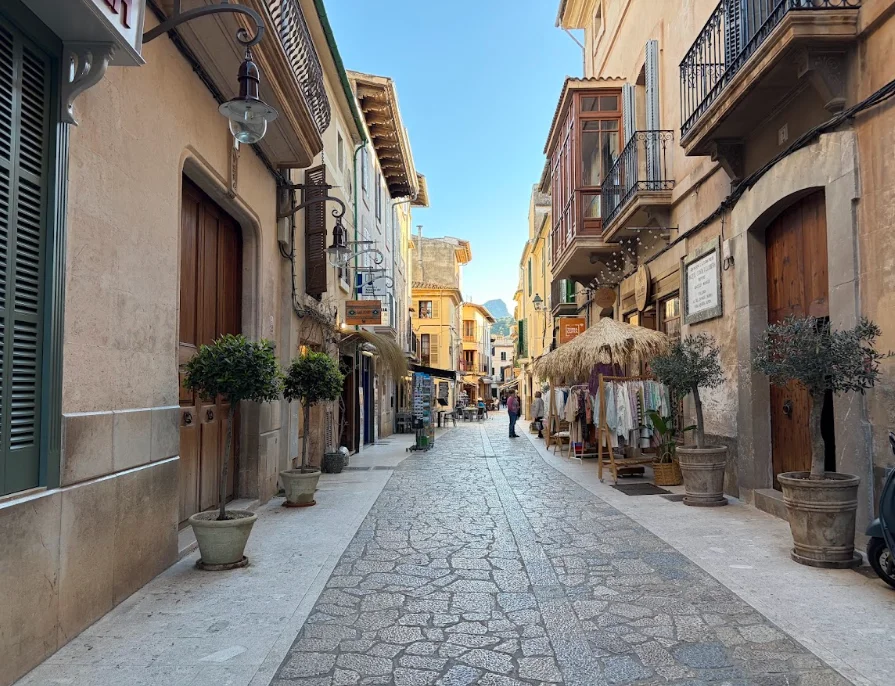
The old town of Pollença is compact enough to cover on foot in an afternoon and interesting enough to justify taking your time. The streets are narrow, the architecture is consistent, old stone houses, wooden shutters, the occasional hidden courtyard and the scale keeps it from feeling overwhelming.
The Convent de Sant Domingo
The Convent de Sant Domingo founded in the 16th century by the Dominican Order, is home to the town’s local museum and a baroque-façaded church. It’s a calm, well-preserved space and worth 20 to 30 minutes if you have them.
The Pont Romà
The Pont Romà, an ancient Roman bridge at the edge of town is often missed by visitors but takes only a short walk from the centre to reach. It’s a quiet, understated landmark that gives a sense of just how long this part of the island has been inhabited.
Port de Pollença
Port de Pollença is around 10 minutes by car from the old town and makes for a natural afternoon extension. The Pine Walk, a long promenade under old pine trees runs along a calm bay with views across the water to the Formentor peninsula. It’s one of the most pleasant walks in the north of Mallorca, particularly in the early evening when the light on the bay is at its best.
The food around the port focuses on seafood and simple Mediterranean dishes. Fresh fish, grilled or simply prepared, is the highlight. The atmosphere is more casual and coastal than the old town, and it works well as a place to wind down at the end of a day. A boat trip from the port to Cap de Formentor or along the north coast is also worth looking into if the weather is good.
Cap de Formentor
If you have a full day in the area, the drive to Cap de Formentor is one of the best on the island. The road winds through pine forest and over dramatic cliff edges, with several viewpoints along the way the Mirador Es Colomer is the most visited and offers a vertiginous view down to the sea far below.
The cape itself, at the very tip of the peninsula, feels genuinely remote even in peak season. The lighthouse at the end of the road is a satisfying destination after the drive, and the surrounding landscape, steep cliffs, clear water, Mediterranean scrub is unlike anything else on the island. Aim to arrive before 10am or after 4pm to avoid the heaviest traffic on the road.
If you’re visiting between May 15 and October 15, it’s important to know that the road to Cap de Formentor is closed to private vehicles daily between 10am and 10pm as part of Mallorca’s seasonal traffic restrictions. During these hours, visitors can still reach the area using the public Bus Line 334, which runs from both Port de Pollença and Alcúdia. Outside restricted hours, the road remains accessible by car.
How Pollença fits into a wider Mallorca food trip
Pollença represents the slower, more ingredient-focused side of Mallorcan food culture, a useful counterpoint to the social, bar-hopping energy of Santa Catalina in Palma or the refined dining scene in Sóller. If you’re spending a week or more on the island, moving between areas is the most complete way to understand how food works here. Each region has a distinct character shaped by its geography, its produce, and its relationship with the sea.
Pollença pairs naturally with Alcúdia for a coastal contrast, or with a day or two in Palma if you want the full range of the island’s food scene. For anyone planning a food-focused trip to Mallorca, it’s one of the towns that makes the strongest case for spending time in the north.
There are also food experiences across the Balearics that take a similar approach combining local restaurants, traditional dishes, and insider knowledge across different islands. Worth exploring if Mallorca is part of a longer trip.